Types Of Appliances
Appliances In Newtown & Monroe, CT
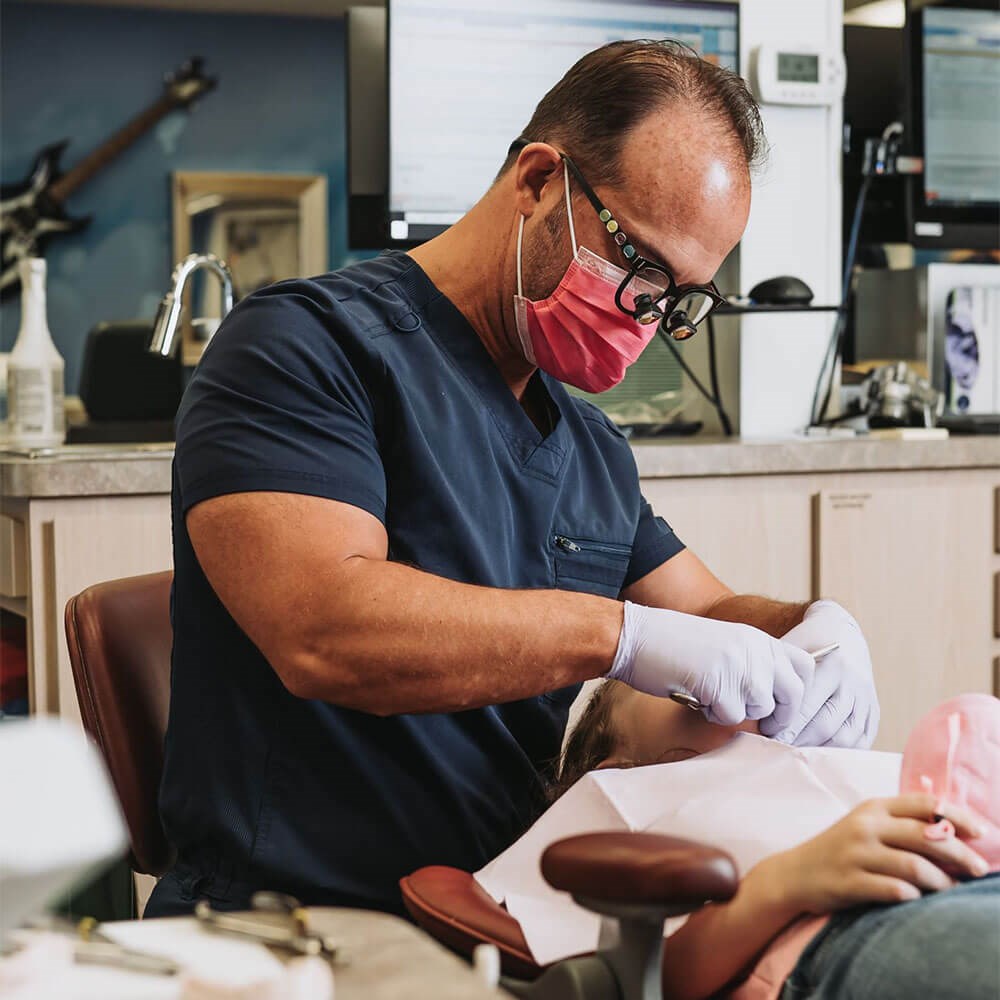
At Baum Braces, we use various appliances to help correct your teeth and give you a more comfortable bite. Appliances aid braces in leveling and aligning various bite types to achieve the best possible results.
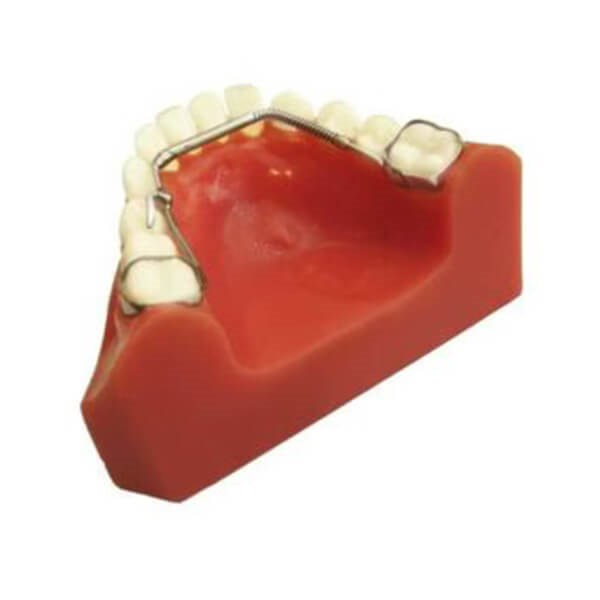
The Rocket expander is a streamlined, self-activating expander. We insert it and it is programmed to expand on its own to create more space for your permanent teeth. The Rocket is two separate main pieces, one with a hollow end and one solid with a coil spring around it. We compress the spring, put the two pieces together, and then glue it onto your molars. The Rocket is now activated and will begin to gently expand. After a few months, you will begin to see your most crowded teeth improve.
What To Expect
- The first few days with your new expander will be an adjustment period. Your teeth may be sore and achy. Tylenol or Ibuprofen can provide some relief.
- Eating may feel weird. Try softer foods in the beginning. Smoothies and puddings are easy to eat.
- You will have extra saliva in your mouth. Your brain thinks everything that goes into your mouth is food. Once your brain realizes that it can’t eat the Rocket, it will stop creating extra saliva.
- Some words may be hard to pronounce in the beginning. The more you speak the quicker you will get used to it.
- It may seem challenging to swallow, but this is also only temporary. Give it some time.
Do’s & Don’ts
- Do brush your Rocket when you brush your teeth.
- Do continue to see your dentist for regular checkups every 6 months.
- Don’t eat any sticky, chewy candy or gum. These can loosen the appliance.
- Don’t eat nuts or popcorn. These can get caught under the wires of the Rocket and irritate your gums. “Pirates Booty” popcorn is fine. It has no shell.
Class 2
Class 3
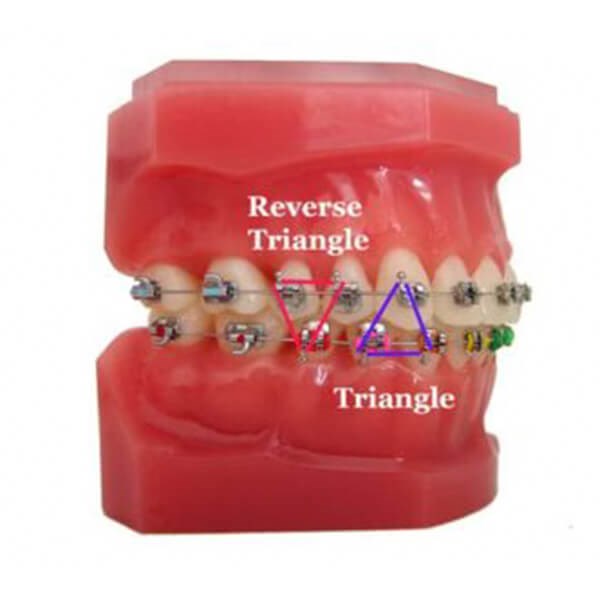
Triangle
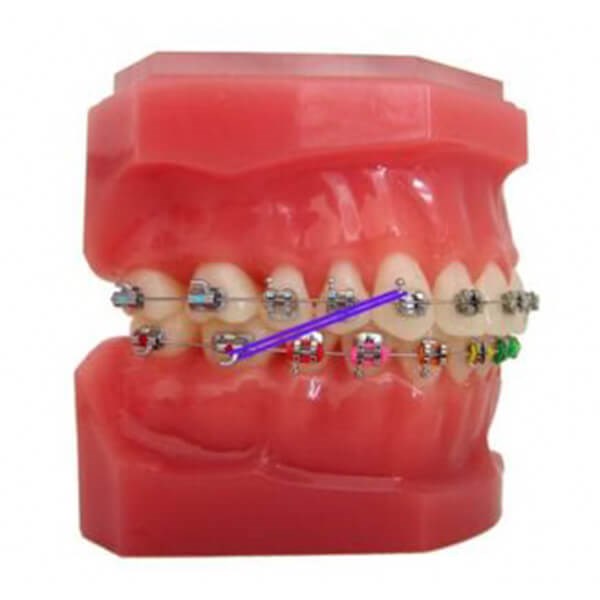
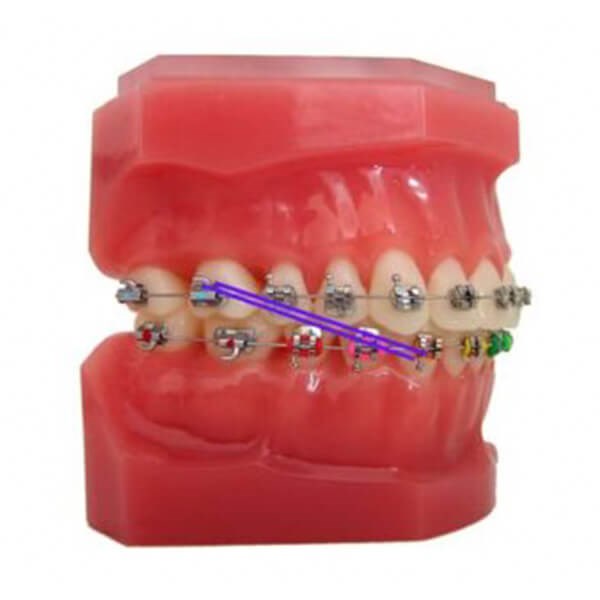
Elastics are worn with braces or an appliance to help close space and/or correct your bite. The elastics must be worn as instructed; usually 24 hours a day. Please take the elastics out when you brush your teeth. However, you may leave them in when you are eating (this is up to you). We would like you to put fresh elastics in several times a day. In the beginning, the elastics may make your teeth sore. Tylenol or Ibuprofen can offer some relief. Eventually, your teeth will adjust to the elastics and you won’t even notice them (but only if you wear them as directed). Wearing your elastics consistently will help you achieve the best result possible and will help you get your braces off sooner.
Class 2
These elastics are worn from a hook on your lower first molar to a loop on your upper archwire or to a post on a bracket near the upper front teeth. We will ask you to wear this style of elastics when we are closing space or reducing your overbite.
Class 3
These elastics are worn from a hook on your upper first molar to a loop on your lower archwire or to a post on a bracket near the lower front teeth. We will ask you to wear this style of elastics if we are trying to reduce an underbite.
Triangle
Triangle, reverse triangle, and box elastics are used to help your upper & lower teeth fit together correctly. You will attach them to the small posts that are on your brackets. The shape of a triangle or box is determined by Dr. Baum. The elastics will open and close with your mouth.
Midline Elastics
Midline elastics are a combination of a Class 2 elastic on one side and a Class 3 elastic on the other side. Your orthodontist will specify which way he would like them to be worn. Please call us if you are unsure how to wear your elastics.
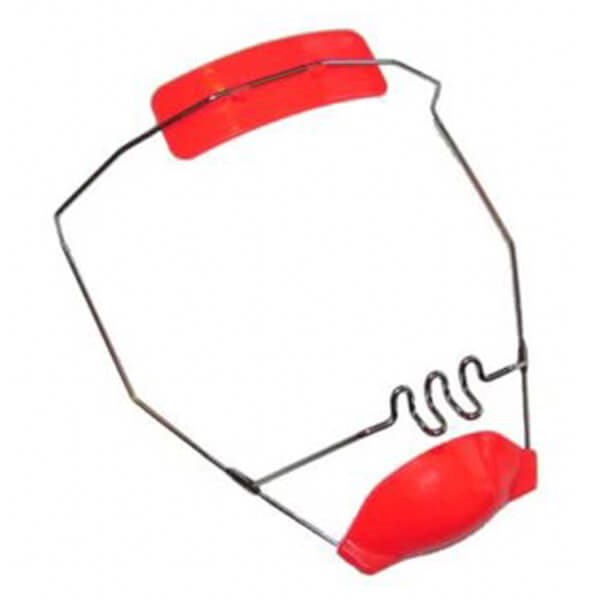
The face mask is used for young, growing patients that have an underbite or what is termed a Class III skeletal growth pattern. It is used in conjunction with an expander or other orthodontic appliance to slow the growth of the lower jaw and stimulate the growth of the upper jaw. An elastic is attached in a criss-cross fashion from each hook of the appliance to the face mask. Most often, you will be instructed to wear the face mask for at least 12 hours per night.
What To Expect
- The first few days with your new face mask will be an adjustment period. Your teeth may be sore and achy. Tylenol or Ibuprofen can provide some relief.
- Dry skin or a slight irritation can develop where the mask contacts your skin. Cosmetic pads that are available at most pharmacies can be used as an additional cushion between the mask and your skin.
Do’s & Don’ts
- Do wear your face mask every night. We strive for 12+ hours every night.
- Do use a new pair of elastics each time you put on your face mask.
- Do continue to see your dentist for regular checkups every 6 months.
- Do bring the face mask with you to your appointments.
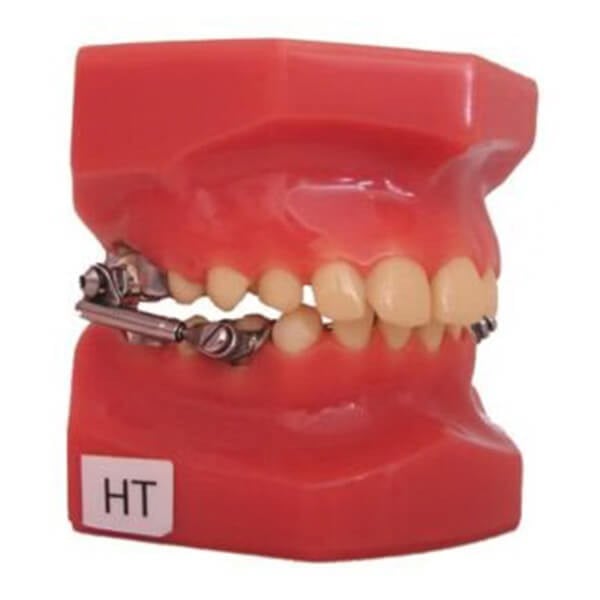
The Herbst appliance or H.T. is used to stimulate the growth of the lower jaw and correct an overbite. The piston-like arms are attached to temporary stainless steel crowns that are “glued” to the first molars. At each visit, your progress is checked and your bite is measured. An extension may be added to the arms as more growth is needed. Once the desired bite has been achieved, we will hold the lower jaw in its new position until a total of one year has been reached with the H.T.
What To Expect
- The first few days with your new H.T. will be an adjustment period. Your teeth may be sore and achy. Tylenol or Ibuprofen can provide some relief.
- Eating may feel weird. Your teeth no longer touch where they used to. Try softer foods that require little chewing in the beginning. Smoothies and puddings are easy to eat.
- You will have extra saliva in your mouth. Your brain thinks everything that goes into your mouth is food. Once your brain realizes that it can’t eat the H.T. it will stop creating extra saliva.
- Your cheeks may get irritated from the hubs where the arms of the H.T. are attached. You can try to cover up the hub with wax. If the irritated area seems to get worse, please call our office.
Do’s & Don’ts
- Do brush your H.T. when you brush your teeth.
- Do continue to see your dentist for regular checkups every 6 months.
- Don’t eat any sticky, chewy candy or gum. These can loosen the appliance.
- Don’t eat nuts or popcorn. These can get caught under the wires of the Frog and irritate your gums. “Pirates Booty” popcorn is fine, it has no shell.
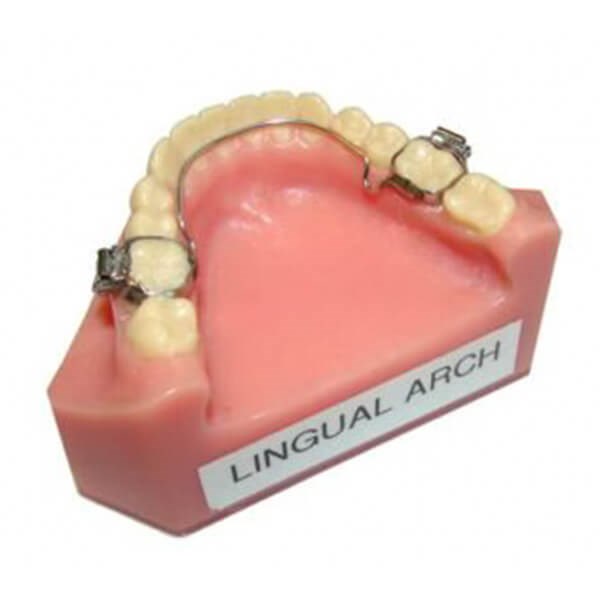
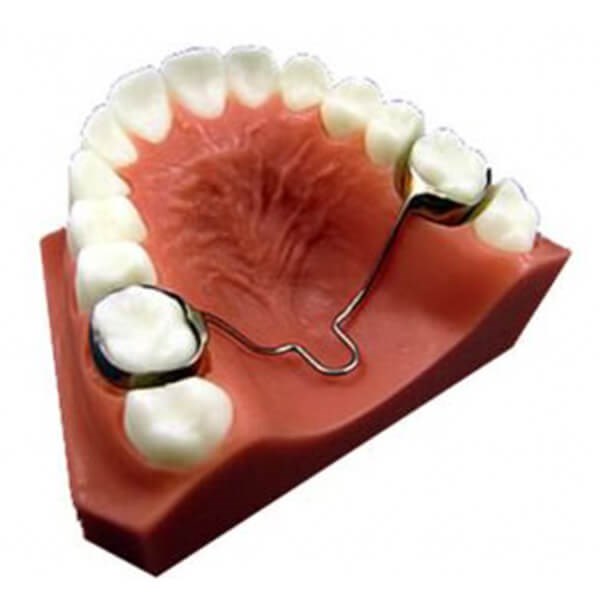
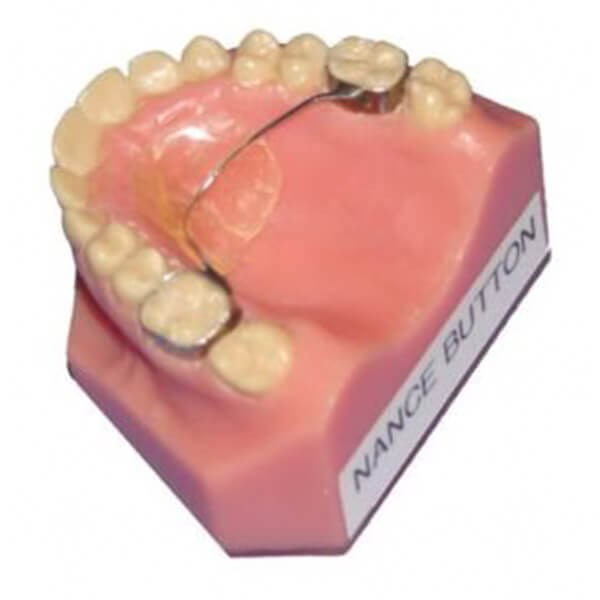
These are 3 very similar appliances. You will have two bands “glued” to your first molars that hold the appliance in place. The Lingual Arch, Palatal Bar, and Nance Button are primarily used to maintain important spaces. Sometimes the space is naturally occurring, other times we may have created it on purpose. This can help the adult teeth have the room they need to erupt and perhaps guide them into a better position. Other times, these appliances are used as anchors for elastic wear. In this case, a small hook would be attached to each molar band. Of course, we would show you the proper way to attach an elastic to these hooks.
What To Expect
- Eating may feel weird. Try softer foods in the beginning. Smoothies and puddings are easy to eat.
- You may have extra saliva in your mouth. Your brain thinks everything that goes into your mouth is food. Once your brain realizes that it can’t eat the appliance it will stop creating extra saliva.
- Some words may be hard to pronounce in the beginning. The more you speak the quicker you will get used to it.
- It may also seem challenging to swallow. This is also only temporary. Give it some time.
Do’s & Don’ts
- Do brush your appliance when you brush your teeth.
- Do continue to see your dentist for regular checkups every 6 months.
- Don’t eat any sticky, chewy candy or gum. These can loosen the appliance.
- Don’t eat nuts or popcorn. These can get caught under the wires of the Frog and irritate your gums. “Pirates Booty” popcorn is fine, it has no shell.
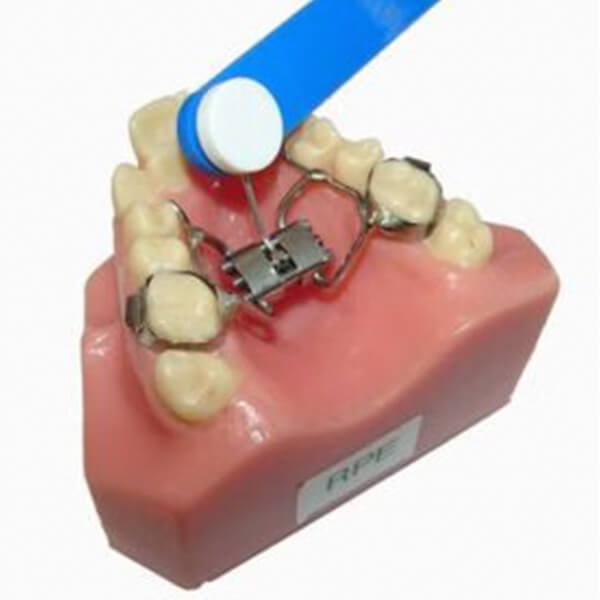
The Rapid Palate Expander or RPE is used to correct jaw width, resolve crowding, and correct crossbites. The only time in our lives that this can be accomplished is when we are young and growing. With the gentle turning of the “key”, we can create more room and obtain the desired width. Each turn equals approximately ¼ mm, which is extremely small. If you miss a day, don’t panic, it is not a big deal. Just try to complete the instructed number of turns before your next visit. You will be instructed on how to insert the key into the hole towards the front of your mouth and to push it back gently until you can’t press back any further. At this point, a new hole should appear near the front and it is safe to slide the key out. In the beginning, you may experience some pressure or tingling in the roof of your mouth or in your nose. This usually goes away shortly. Space may also develop between the front teeth, this is normal and temporary.
What To Expect
- The first few days with your new RPE will be an adjustment period. Your teeth may be sore and achy. Tylenol or Ibuprofen can provide some relief.
- Eating may feel weird. Try softer foods in the beginning. Smoothies and puddings are easy to eat.
- You will have extra saliva in your mouth. Your brain thinks everything that goes into your mouth is food. Once your brain realizes that it can’t eat the RPE, it will stop creating extra saliva.
- Some words may be hard to pronounce in the beginning. The more you speak the quicker you will get used to it.
- It may also seem challenging to swallow, this is only temporary. Give it some time.
Do’s & Don’ts
- Do brush your RPE when you brush your teeth.
- Do continue to see your dentist every 6 months.
- Don’t eat any sticky, chewy candy or gum. These can loosen the molar bands.
- Don’t eat nuts or popcorn. These can get caught under the wires of the RPE and irritate your gums. “Pirates Booty” popcorn is fine. It has no shell.
Retention is the final part of your orthodontic treatment. When your braces are removed, it is natural for your teeth to try to shift slightly. Your retainer will help prevent this from happening. If cared for properly, your retainer can last for many years. If your retainer ever breaks or begins to fit less comfortably, it is usually best to continue to wear it rather than not at all. However, please call us if this occurs.
Wearing Instructions
- Beginning the first day, wear your retainer every night for a minimum of 8 hours per night unless instructed differently.
- After the prescribed amount of time, you may begin to wear your retainer every other night indefinitely. The longer you wear the retainer, the better. It is a lifelong commitment to keeping your teeth beautiful.
Do’s & Don’ts
- Do wear your retainer as instructed.
- Do brush your retainer with a toothbrush, toothpaste, and cool water to keep it clean.
- Do dry your retainer and keep it in the case when it is not in your mouth.
- Do keep your retainer away from pets, especially dogs. They love the smell of your saliva and think that they are chew toys.
- Don’t eat with your retainer.
- Don’t wrap your retainer in a tissue or napkin. It is easily thrown away.
- Don’t soak your retainer in mouthwash. If it needs to be refreshed, you may brush it with mouthwash.
- Don’t use hot water to clean your retainer. Hot water will distort the fit of your retainer. Use cool water only.
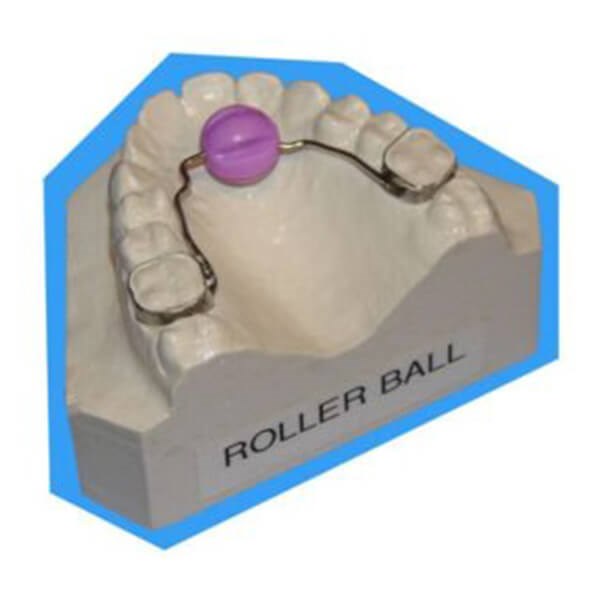
The roller ball is used to break a finger-sucking habit or a tongue-thrusting habit. No matter how young or old you are, we understand this is a difficult habit to break. It can also be a trying time for your parents as well. However, with a lot of persistence, the end result will be very rewarding. For Tongue Thrusting: You are encouraged to “play” with the roller ball. With your tongue, try to spin the ball from front to back in a sweeping motion. This is the opposite of your natural tendency. Please do this often as we are retraining your tongue. For Finger Sucking: The ball will serve several purposes. First, it makes it difficult to fit your finger or thumb in your mouth and is a reminder that it doesn’t belong here. Second, the ball won’t allow your finger to rest in the roof of your mouth, so no suction can form. Third, since the ball spins, it provides a distraction.
What To Expect
- Your habit will not stop overnight. It takes time to change something you have done your whole life.
- The first few days with your new roller ball will be an adjustment period. Your teeth may be sore and achy. Tylenol or Ibuprofen can provide some relief.
- Eating may feel weird. Try softer foods in the beginning. Smoothies and puddings are easy to eat.
- You will have extra saliva in your mouth. Your brain thinks everything that goes into your mouth is food. Once your brain realizes that it can’t eat the roller ball, it will stop creating extra saliva.
- Some words may be hard to pronounce in the beginning. The more you speak the quicker you will get used to it.
- It may seem challenging to swallow, but this is only temporary. Give it some time.
Do’s & Don’ts
- Do brush your roller ball when you brush your teeth.
- Do continue to see your dentist for regular checkups every 6 months.
- Don’t eat any sticky, chewy candy or gum. These can loosen the appliance.
- Don’t eat nuts or popcorn. These can get caught under the wires of the roller ball and irritate your gums. “Pirates Booty” popcorn is fine. It has no shell.
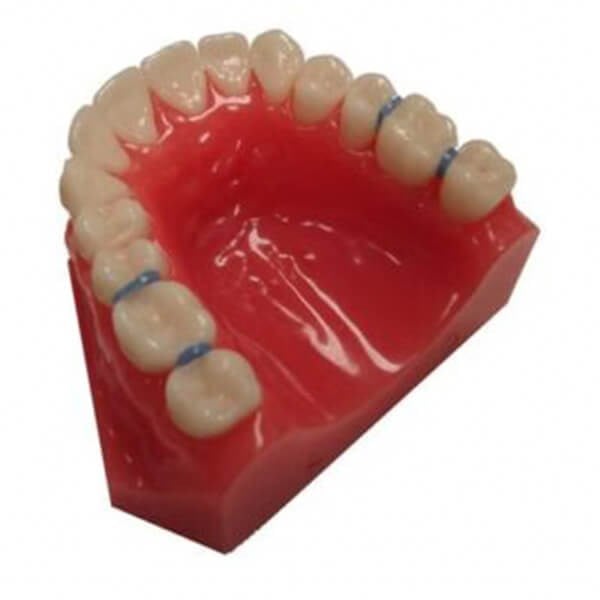
These little blue rubber circles are used to create space between your teeth so we can easily fit the metal bands of your braces or appliance at your next appointment.
What To Expect
Your teeth may be tender and achy for a couple of days. Tylenol or Ibuprofen can provide some relief. Softer foods are easier to eat when your teeth are sore. Please avoid sticky, chewy candies as they tend to loosen the spacers. If one spacer is lost, it is usually no big deal and does not need to be replaced. If more than one spacer falls out, please give our office a call. That way we can let you know if we will need to see you to replace them. If the spacers are lost right before your next appointment (within 48hours), it is usually not necessary to put them back in. This simply means that there is plenty of space ready for us to utilize on your next visit.
Do’s & Don’ts
- Do continue to brush your teeth normally while wearing spacers.
- Don’t floss between the teeth where the spacers are placed.
- Don’t eat any sticky, chewy candy or gum.
- Don’t pick at your spacers.

